
Introduction
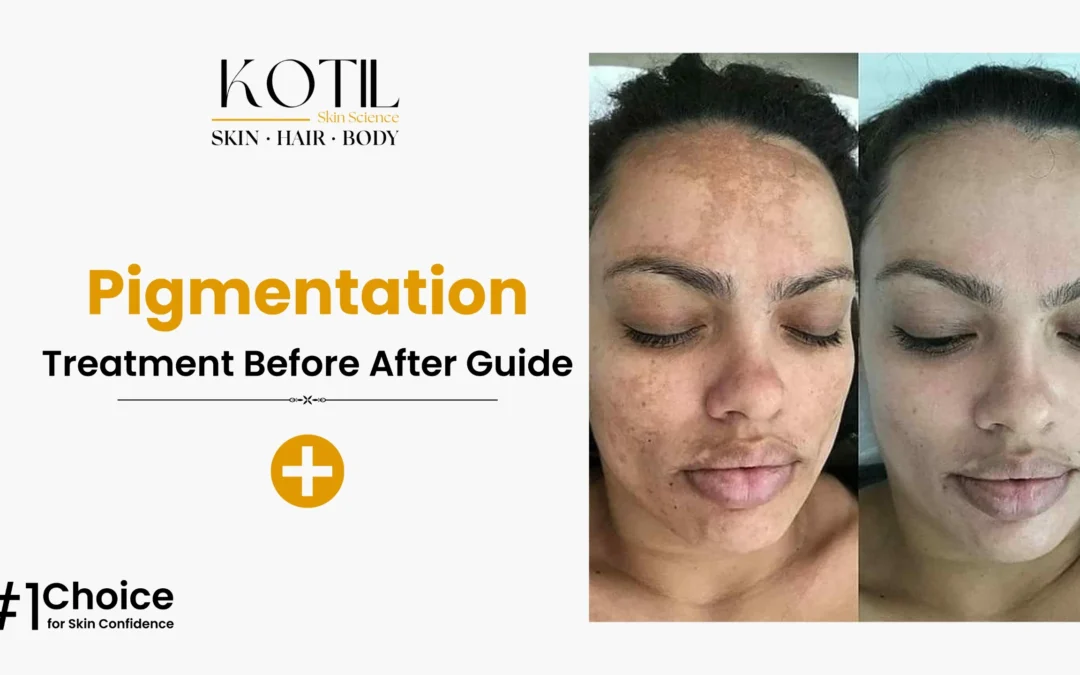
Pigmentation is not just a cosmetic concern; it is a visible indicator of underlying skin imbalance. At Kotil Skin Science, we approach pigmentation with a results-driven, clinical mindset. This Pigmentation Treatment Before and After Guide is designed to give a clear, realistic, and medically accurate understanding of how professional pigmentation treatments transform
This guide does not rely on exaggerated promises. Instead, it focuses on realistic before and after outcomes, treatment timelines, skin response patterns, and factors that influence visible improvement. If you are considering pigmentation treatment, this guide sets the correct expectations.
What Pigmentation Looks Like Before Treatment
Before starting any pigmentation treatment, patients usually present with one or more of the following conditions:
- Melasma (brown or grey patches on cheeks, forehead, upper lip)
- Post-inflammatory hyperpigmentation caused by acne or injury
- Sun-induced pigmentation and tanning
- Uneven skin tone and patchy discoloration
- Dull, rough texture with visible dark areas
Common Characteristics of Pigmented Skin (Before)
- Uneven melanin distribution
- Patchy or layered discoloration
- Increased sensitivity to sunlight
- Slow natural fading despite home remedies
- Makeup dependency to conceal dark patches
These “before” conditions are crucial for treatment planning. Pigmentation depth, skin type, and trigger factors determine the extent of the after-effects.
Understanding Pigmentation Treatment Before and After Progression
Pigmentation does not disappear overnight. Any clinic claiming instant removal is misleading. Pigmentation treatment results occur in stages, and each phase reflects internal skin repair.
Stage 1: Initial Skin Response (Weeks 1–3)
- Reduction in dullness
- Improved hydration and glow
- Slight lightening of superficial pigmentation
- Skin texture becomes smoother
This phase is often subtle but essential. Many patients underestimate this stage, yet it prepares the skin for deeper correction.
Stage 2: Visible Pigmentation Reduction (Weeks 4–8)
- Dark patches begin to fragment
- Edges of pigmentation soften
- Overall skin tone starts evening out
- Reduced contrast between pigmented and normal skin
This is where before-and-after differences become noticeable, especially in controlled lighting and photographs.
Stage 3: Stabilization and Maintenance (Weeks 9–16)
- Pigmentation depth reduces significantly
- Skin appears clearer and more uniform
- Reduced recurrence when maintenance is followed
- Long-term brightness and clarity
True after-effects are judged at this stage, not after one session.
Types of Pigmentation Treatments and Their Before and After Impact
Clinical Peels
Chemical peels target superficial and mid-level pigmentation.
Before:
- Dull, uneven tone
- Surface-level dark patches
After:
- Brighter complexion
- Refined texture
- Lightened pigmentation layers
Laser Pigmentation Treatment
Laser works on deeper melanin deposits.
Before:
- Stubborn pigmentation
- Long-standing dark patches
After:
- Significant fading of deep pigmentation
- Clearer skin with improved tone uniformity
Laser results are cumulative and must be assessed over multiple sessions.
Medical-Grade Topical Protocols
Prescription-strength actives regulate melanin production.
Before:
- Recurring pigmentation
- Poor response to cosmetic products
After:
- Controlled melanin activity
- Reduced relapse frequency
- Improved skin barrier strength
Pigmentation Treatment Before and After – Realistic Expectations
Unrealistic expectations ruin satisfaction. Here is what professional pigmentation treatment does and does not do.
What You Can Expect
- 60–90% visible pigmentation reduction (depending on type)
- Noticeable skin tone uniformity
- Long-term improvement with maintenance
- Healthier skin texture
What You Should Not Expect
- Permanent removal without maintenance
- One-session miracles
- Identical results for every skin type
- Zero recurrence if sun protection is ignored
Pigmentation is a condition that requires management, not shortcuts.
Factors That Influence Before and After Results
Skin Type and Genetics
Darker skin tones respond well but need controlled protocols to prevent rebound pigmentation.
Pigmentation Depth
- Epidermal pigmentation responds faster
- Dermal pigmentation requires longer treatment cycles
Lifestyle and Sun Exposure
No pigmentation treatment survives careless sun exposure. Sunscreen compliance directly affects the results.
Hormonal Influence
Melasma linked to hormones requires ongoing control, not just treatment.
Before and After Photography – How to Read Results Correctly
Misleading before-and-after images are common online. At Kotil Skin Science, standardized photography ensures accuracy.
Correct Evaluation Parameters
- Same lighting conditions
- No filters or makeup
- Same facial expression and angle
- Time-stamped progression
True pigmentation improvement is measured in tone consistency, not artificial brightness.
Pigmentation Treatment Maintenance After Results
Achieving results is only half the journey. Maintaining them is critical.
Post-Treatment Care
- Daily broad-spectrum sunscreen
- Melanin-regulating topical actives
- Periodic clinical maintenance sessions
- Avoiding unnecessary heat exposure
Patients who follow maintenance protocols maintain results for years, not months.
Why Professional Treatment Outperforms Home Remedies
Home remedies may mildly fade surface discoloration, but cannot:
- Regulate melanin production
- Reach deeper pigmentation layers
- Prevent recurrence
- Improve overall skin health
Professional treatment addresses pigmentation biologically, not cosmetically.
Who Is the Ideal Candidate for Pigmentation Treatment
- Individuals with persistent dark patches
- Acne-scar-related pigmentation
- Sun damage and tanning issues
- Uneven skin tone unresponsive to products
Early treatment leads to faster and better before-and-after transformation
Frequently Asked Questions (FAQs) – Pigmentation Treatment Before and After Guide
1. How long does it take to see visible pigmentation treatment results?
Visible pigmentation treatment before and after results usually begin to appear within 3–4 weeks, with clearer and more uniform skin seen over 8–12 weeks, depending on pigmentation depth and skin type.
2. Are pigmentation treatments before and after results permanent?
No. Pigmentation treatment before and after results are long-lasting but not permanent. Maintenance care, sun protection, and lifestyle control are essential to prevent recurrence.
3. Does pigmentation completely disappear after treatment?
Pigmentation rarely disappears 100%. Most patients experience a 60–90% visible reduction, which is considered an excellent pigmentation treatment before and after outcome in clinical dermatology.
4. Is pigmentation treatment safe for Indian skin tones?
Yes. When performed at a medical clinic like Kotil Skin Science, pigmentation treatment is customized for Indian skin tones to avoid burns, rebound pigmentation, or uneven results.
5. How many sessions are required for pigmentation treatment before and after results?
On average, 4–8 sessions are required. Deep or hormonal pigmentation may require more sessions and long-term management.
6. Why do some people see faster pigmentation treatment before and after results than others?
Results vary due to:
- Pigmentation depth
- Hormonal factors
- Sun exposure habits
- Skin type
- Treatment compliance
Pigmentation is not a one-size-fits-all condition.
7. Can pigmentation return after successful treatment?
Yes. Pigmentation can return if sun protection, skincare, and follow-up protocols are ignored. Maintenance is a critical part of long-term pigmentation control.
8. Is laser pigmentation treatment better than chemical peels for before-and-after results?
Neither is “better” universally.
- Laser works better for deep pigmentation
- Chemical peels work well for superficial pigmentation
Most effective pigmentation treatment before and after results come from combined protocols.
9. Are pigmentation treatment before and after photos always reliable?
Not always. Reliable before and after photos must be taken:
- In identical lighting
- Without filters
- Without makeup
- At fixed time intervals
Clinically documented photos are the most trustworthy.
10. Can home remedies give the same pigmentation treatment before and after results?
No. Home remedies may slightly brighten skin, but cannot control melanin production or pigmentation depth, which is why professional treatment delivers superior before-and-after results.